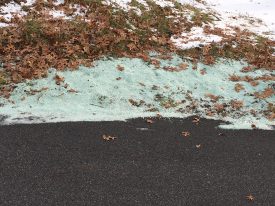
Pesticide ban is failing to protect suburban bee populations

[This article shows how truly dangerous such pesticides are to sensitive species and even to the future of flowering plants. In the European Union, even after a ban on farming use of neonicotinoids, bees remain under threat from home use. How much greater the peril in the US, where the pesticide lobby and its political agents keep the pesticides flowing freely!]

by Brendan Montague, Ecologist, 25th July 2018

Bees living in suburban habitats are still being exposed to significant levels of pesticides despite the EU ban on the use of neonicotinoid pesticides on flowering crops, new research from University of Sussex scientists shows.

While the introduction of new EU restrictions on the use of neonicotinoid chemicals five years ago has reduced exposure of bees living in farmland, the study found that overall more than half of all pollen and nectar samples collected from bee nests in Sussex, Hertfordshire and Scotland between 2013 and 2015 were contaminated.

The study is the first of its kind to highlight the risk to bees in urban areas posed by garden use of pesticides.

Bee-attractive

The scientists at the University of Sussex are urging gardeners to ditch their bug sprays immediately in favour of encouraging natural predators such as ladybirds or lacewings, and the use of physical methods such as hand-removal of pests, and netting or sticky traps.

Dr Beth Nicholls, postdoctoral research fellow in evolution, behaviour and environment at the University of Sussex and the study’s lead author, said: “Our findings suggest that the EU’s recent decision to extend the neonicotinoid moratorium to include all field crops is likely to have a positive effect on bees, relieving some of the stress on our already struggling pollinator populations.

“However, given that bees in suburban gardens appear to remain at risk post-moratorium, further work is needed to understand the sources of neonicotinoid exposure in these areas and to find ways to reduce it.

“Our study indicates that limiting the public sale and use of neonicotinoid-based bug sprays, which are currently unaffected by the moratorium, is needed if we are to protect bee populations living in and around our towns and cities.”…

read more at Ecologist
Some basics

We in Don’t Spray Me! are in favor of scientific knowledge.

We would like public officials to share more background information with the public.

We find it disrespectful of taxpayers and residents when public employees do not reveal information that they should have, even when we file Right To Know requests as specified by state law.

How does the Health Department decide when and where to spray pesticides on private and public spaces?

How does it implement its promise of “exhausting all other available mosquito control strategies” before spraying?

Where has the County been applying larvicide (the most effective means of mosquito control)?

The short answer we keep getting is: no answer. But we will get answers, because we believe in an informed public active in asserting its rights against policies whose own implementers cannot or do not care to justify them.

In case you are wondering: spell “larvicide” or “larvacide,” “mosquitoes” or “mosquitos.”

“Spraying” refers to an air-borne mist, spread by trucks in streets in the case of mosquito control in inhabited areas, that kills adult insects (not eggs, larvae, or pupae) that happen to fly into its droplets and can harm others like amphibians, fish, and cats.

“Larviciding” involves dropping in standing water a biological agent that kills mosquito larvae right where they are growing; larvicide is harmless to people and other organisms (except another pest insect species).

Don’t Spray Me! wants more larviciding and less spraying!

Against spraying

By a West Chester resident, 8/13/18

I just heard that the Chester County Health Department is planning to do mosquito spraying in much of the Borough this Thursday night (rain date on Monday night). You can find the press release at the County site once they upload it. It was emailed to me.

I am concerned about the spraying from a human and animal health perspective as well as from an environmental perspective. I am involved with a grassroots organization, Don’t Spray Me!, that has been expressing concern about the spraying for years.

Some things that have been uncovered are (and this is just some of what has been discovered):

1. They use a highly toxic pesticide that environmental groups have on their black list.

2. The research on the use of this pesticide has shown that it is highly ineffective as it only kills adult mosquitoes (and the eggs are still able to hatch) whose life cycle is only 2 weeks. The pesticide does harm and kill other beneficial creatures (like bats) that keep the mosquitoes in check. We should leave it up to Mother Nature to keep things in balance.

3. Most counties in PA and other states don’t have a spray program and they don’t have outbreaks of West Nile.

4. When this quadrant was sprayed about 6 years ago, the man who was driving the truck spraying admitted that he didn’t follow the manufacturer’s directions and he sprayed a higher concentration (he went up and down both streets and alleys) and they didn’t cover playground equipment or shut off the spray near water sources (like the manufacturer of the pesticide recommends). I am concerned that the pesticide was not applied safely or according to protocol.

5. We have questioned repeatedly how the Health Department determines their vector index (which is what they use to determine if they will spray or not). Our statistician has found many holes in their calculations and never gets an answer when asked. We recently found out that the man who calculates vector indices is no longer working at the Chester County Health Department.

6. We have repeatedly asked the Health Department to larvacide in areas that we know are an issue like the College Avenue Pumping Station. That is a non-toxic and effective way to address the mosquito population. They do not tell us what they do larvacide.

7. The pesticide is mixed with a catalyst which allows it to stick to the surfaces and therefore stick around for months, and some say for a year. I don’t want that on our streets, on our lawns, and then tracked into our houses. I wouldn’t eat vegetables from a garden after a spray.

I could go on and on but you get the idea. No one can argue that pesticides are safe. I think the general public is more concerned about autoimmune diseases and cancer than West Nile. Did you hear that a man who sued Monsanto was just awarded $289 million dollars because it was proved that his health issues were the result of using Round Up? And there are 4,000 more cases in the pipeline. People are waking up and fighting to protect themselves.

Don’t Spray Me! isn’t saying don’t protect us from West Nile but we are advocating for non-toxic and effective solutions!

If you feel the same way about this issue, you can take 3 actions:

1. Call and email Jeanne Casner, Director of the Chester County Health Department at 610-344-6225, jcasner@chesco.org TODAY!

2. Attend a meeting: Borough Council is holding an emergency meeting Tuesday, August 14th, to hear public comments and make a plan. The meeting will be at 7 p.m. in the Spellman Building (the previous location of West Chester School District Administration Offices), 829 Paoli Pike.

3. Share this message and the importance of attending the meeting with anyone you know.

Court Orders E.P.A. to Ban Chlorpyrifos, Pesticide Tied to Children’s Health Problems

By Eric Lipton, New York Times, Aug. 9, 2018

WASHINGTON — A federal appeals court ordered the Environmental Protection Agency on Thursday to bar within 60 days a widely used pesticide associated with developmental disabilities and other health problems in children, dealing the industry a major blow after it had successfully lobbied the Trump administration to reject a ban.

The order by the United States Court of Appeals for the Ninth Circuit came after a decade-long effort by environmental and public health groups to get the pesticide, chlorpyrifos, removed from the market. The product is used in more than 50 fruit, nut, cereal and vegetable crops including apples, almonds, oranges and broccoli, with more than 640,000 acres treated in California alone in 2016, the most recent year data is available.

In March 2017, just a month after he was confirmed as the agency’s administrator, Scott Pruitt rejected a petition by the health and environmental groups to ban the pesticide. He did so even though the agency’s own staff scientists had recommended that chlorpyrifos be removed from the market, based on health studies that had suggested it was harming children, particularly among farmworker families.

A three-judge panel, on a 2-to-1 vote, gave the agency two months to finalize the ban on the product, whose leading manufacturer is DowDuPont….

read more at New York Times

Mosquito control treatment scheduled for Parkesburg Borough to prevent West Nile Virus

[Note: we have often wondered how a pesticide can “prevent” a virus when it can’t even “prevent” mosquitoes. Note on the active ingredient deltamethrin from Wikipedia: “Resistance has been characterised in several insects, including important vectors of malaria like the mosquito Anopheles gambiae as well as non-disease carrying pests like bed bugs.” That is one of the problems with any pesticide: insects can become resistant to anything! Because of acquired resistance, Permanone (previously used in Chesco) could not be used in Miami during the recent Zika scare. If you live in the spray area, see how you can help us here.]

from Chesco Health Department pdf

West Chester, PA – The Chester County Health Department will conduct a mosquito control treatment spray in portions of Parkesburg (see map below). The treatment is scheduled for Thursday, August 9th from 8:00 pm to 11:30 pm. The rain date for this event is Monday, August 13th from 8:00pm to 11:30pm.

The Chester County Health Department conducts mosquito control treatment in areas with high levels of mosquito activity and where multiple mosquito samples have tested positive for West Nile Virus (WNV). After exhausting all other available mosquito control strategies, spraying is conducted to reduce residents’ risk of WNV infection. Anyone living in an area where mosquitoes are infected with WNV is at risk, but the risk of infection is highest for people who work outside or participate in outdoor activities. Less than 1% of people infected will develop serious illness. While serious illness can occur in people of any age, people over 60 years of age, people who have received organ transplants, and people with certain medical conditions such as cancer, diabetes, hypertension, and kidney disease are at the greatest risk for serious illness.

The Chester County Health Department uses a truck-mounted sprayer to apply .66 ounces of U.S. Environmental Protection Agency-approved product (DeltaGard) per acre of land….

read more in the Chesco Health Department pdf

The risks outweigh the benefits

by George Squire CRNP, Active member of DSM

We have noted in recent months that the risks outweigh the benefits when it come to spraying for mosquitoes.

Chemical sensitivity in humans and animals can be deadly when sprays are used indiscriminately. The entire planet becomes the target for such spraying. Infinitely preferable is the use of preventative measures such as BT larvicide which has proved very effective in stopping mosquitoes before they hatch.

As in the field of Medicine, prevention is the key to effective control of this problem. Over the past decade, Medicine has moved toward an evidence-based approach, which has produced some sound research-based science. The data from the use of pesticide and herbicidal sprays has been sadly lacking regarding any potential benefit from their use. Unfortunately, we will always be able to count on the lobbying on behalf of the chemical companies to propagandize us about the benign nature of their products. Their desire for increased profit will continue to skew the public’s understanding of the true nature of these chemicals.

A friend from St Peter’s Village who is a beekeeper and maintains a garden there, has noticed a drastic decline in his bees and other beneficial insects. A steady drop off like this in bees and other beneficial creatures could lead to an agricultural disaster for consumers and farmers alike. Future untold problems could arise with shortages in fruits and vegetables, not to mention farm animals and pets that may eat the poisoned crops.

Let us appeal to our public servants assigned to these tasks. Let us ask them to put their constituents first and make our neighborhoods safer, and maintain the constitutional right to happiness. Let us remind them that there are alternatives to using poison in our water and on our land.

Mosquito control treatment scheduled for Spring City Borough to prevent West Nile Virus

release from Chesco Health Dept., 7/30/18

West Chester, PA – The Chester County Health Department will conduct a mosquito control treatment spray in portions of Spring City Borough (see maps below). The treatment is scheduled for Wednesday, August 1st from 8:00 pm to 11:30 pm. The rain date for this event is Monday, August 6th from 8:00 pm to 11:30 pm.

The Chester County Health Department conducts mosquito control treatment in areas with high levels of mosquito activity and where multiple mosquito samples have tested positive for West Nile Virus (WNV). After exhausting all other available mosquito control strategies, spraying is conducted to reduce residents’ risk of WNV infection. Anyone living in an area where mosquitoes are infected with WNV is at risk, but the risk of infection is highest for people who work outside or participate in outdoor activities. Less than 1% of people infected will develop serious illness. While serious illness can occur in people of any age, people over 60 years of age, people who have received organ transplants, and people with certain medical conditions such as cancer, diabetes, hypertension, and kidney disease are at the greatest risk for serious illness.

The Chester County Health Department uses a truck-mounted sprayer to apply .66 ounces of U.S. Environmental Protection Agency-approved product (DeltaGard) per acre of land…

text continues as usual; see here

No More Bee-Killing Pesticides

PennPIRG summer newsletter

Bees pollinate everything from strawberries to broccoli to the alfalfa used to feed dairy cows, and without them, our food supply and environment would be at risk.

Even so, Americans spray about 46 million pounds of neonicotinoid pesticides—one of the worst types of bee-killing pesticides in the world, yet also the most widely used—on our gardens and public spaces every year.

Given the consequences, PennPIRG is calling on Pennsylvania to ban the sale of bee-killing pesticides. There is already momentum building: Maryland and Connecticut have both taken important action to limit the use of neonics, and the European Union just voted to completely ban them.

We can, and must, do better. Join us in calling on Pennsylvania to take action to protect bees and our food.

Learn more about our Ban Bee-Killing Pesticides campaign and take action here, including link to a petition to PA Governor Wolf, with the description:

Tell Governor Wolf: Ban Bee-Killing Pesticides

Millions of bees are dying every year, and scientists point to a widely used class of pesticides as one of the main culprits behind these die-offs. We rely on bees to pollinate everything from strawberries to broccoli to the alfalfa used to feed dairy cows.

For the past several years, PIRG and other groups have asked the EPA to ban these pesticides nationwide, and they have failed to do so. Now, to protect bees and our food supply, we’re calling on states to act. Call on Governor Wolf to ban the sale of bee-killing pesticides.

Entomologist John Jackson: “Bugs and Weeds Away–the Natural Way”

On May 29, John Jackson (BA in biology, MA in zoology, PhD in entomology) spoke on having a weed-free sidewalk and neutralizing mosquito breeding spots without using harmful chemicals. His talk at Iron Works Church in West Chester was sponsored by Don’t Spray Me! / Sierra Club and the South West Association of Neighbors (SWAN).

Here are some highlights of his talk and the subsequent discussion (with some resorting of topics):

1) Mosquitoes

Mosquitoes are the best-known insects in the world, because of their role in spreading diseases, especially malaria, yellow fever, and dengue. But the ways chemical tools have been overused against them are not in the interest of either people or wildlife. Chemicals may be needed to prevent massive epidemics, especially in the tropics, but when overused become ineffective because insects develop resistance.

There are lots of biting flies beyond mosquitoes. Here, the predominantly evening-biting Culex mosquitoes can carry West Nile Virus but day-biting Aedes (including Asian Tiger, which has been in the US only since 1985) almost never do. People should not view all insects (of which most don’t bite) as enemies.

Culex, the “house mosquito,” overwinters as adults in sheds, porches, tree hollows, and other sheltered areas. The adult mosquitoes we see in May have overwintered; they may have not yet had time to reproduce. Culex mosquitoes love urban environments, where they lay eggs in water where larvae feed on bacteria and organic matter.

West Nile Virus, which came to the US in 1999, depends on birds as a reservoir (unlike Zika, whose reservoir is people, making it easier to contain, as recently in Miami). Some birds, which in the past were often dying of WNV, appear now to be developing immunity. Fortunately, WNV is not transmitted through mosquito eggs, only from a bitten bird to another bitten bird or human. Known human WNV cases have been rare in PA.

Effective non-chemical defenses include tight-fitting screens, fans on ceilings or porches, repellents (notably lemon eucalyptus oil, picaridin, or citronella oil), various odoriferous granules spread in gardens or lawns.

Fogging with pesticides is a bad idea, because it kills many species, including mosquito predators like spiders; drift cannot be controlled; and it kills only adult mosquitoes, whereas many more larvae are just waiting to hatch every day and take over the air space.

The absolutely most important thing is to eliminate standing water, including where we might not think of it: in plastic bottles, the folds of tarps, in the fixed bottoms under some potted plants, even vases in cemeteries.

From mosquito egg to adult probably takes 10-15 days when weather is hot and damp, but 25-30 days with temperatures in the 70’s.

The bacteria-based larvcide Bti is very effective at killing mosquito larvae. The biscuits and granules have slower release than liquid and powder form. The hormonal Methoprene is also not toxic and prevents the metamorphosis to adult.

One of the worst sampling stations is in SE West Chester; it is not clear if that is related to Goose Creek. Trash in suburban streams creates mosquito habitat. And water can stand in old storm sewer lines like the Borough’s.

2) Weeds

Some undesired plants, like dandelions and poison ivy, are best dug up. Weeds are tough, but weakening them by cutting off the leaves a few times makes them more vulnerable to other treatments.

Old-school boiling water works really well; be careful, wear boots and goggles! Ditto butane flame torches. Or: a weak acid breaks down cell walls; vinegar works, but changes the soil chemistry.

He prefers to use 1 cup of borax (another kind of salt) in 1 gallon of warm water to kill weeds. The borax concentration can be doubled if needed. It also, for better or worse, it also kills ants, moss, lichen, and liverwort. Two applications a summer usually suffice, preferably in hot dry weather, since rain washes the borax away.

Regular table salt also kills plants; witness the die-off this past winter along roads and alleys in the Borough, which uses salt and brine to melt snow and ice. Municipalities tend to use twice as much salt as 20 years ago, even though less harmful substances are available. As a result, streams have increased chloride levels; he measured half the salt content of seawater in one stream.


excess salt, edge of alley, West Chester, 12/20/17